



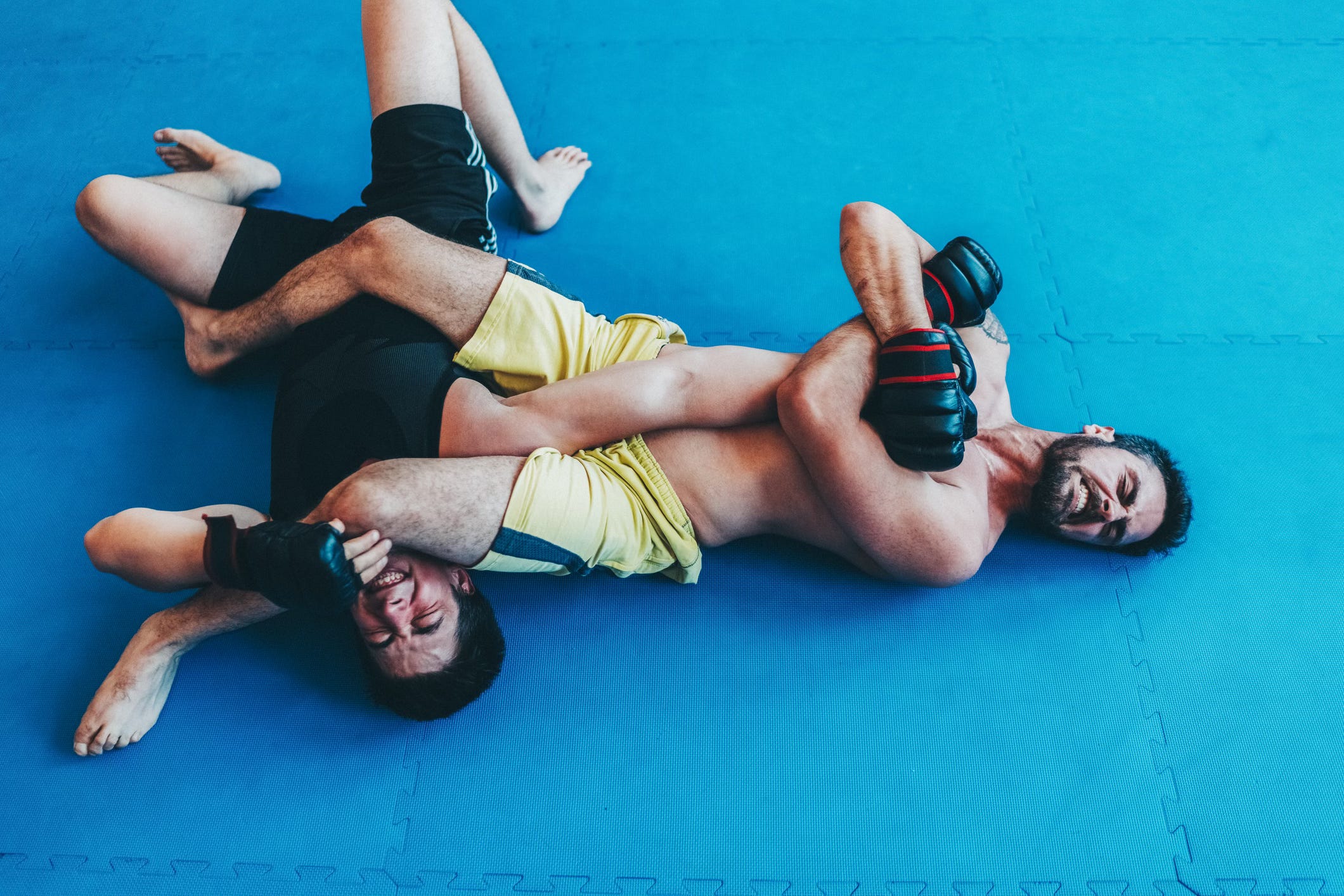
My interest in MSK healthcare grew out of my obsession with combat sports. In 2002 I was in the final stages of completing a maths PhD. In that same year, I became one of the first women in the UK to compete in Mixed Martial Arts (MMA) – which was at the time a small and niche sport often referred to as ‘cage fighting’.
One of the first things I learned about combat sports injuries is that it was almost impossible back then to get good advice on how to get back to fighting after an injury. When I mentioned my sport to a doctor or physiotherapist, they’d look at me like I’d grown another head and suggest it was a bad idea.
So, as with most things about MMA back in those days, we tried to figure it out for ourselves. As a result, my knowledge of combat sports rehab grew from an eclectic mix of things learned from books, the early internet, S&C coaches, a sports therapy course, and a lot of trial and error. A few years later I went back to university to study osteopathy, which added a more systematic understanding of clinical examination, anatomy and pathology, but I can still trace the foundations of what I do in clinic every day to those early years spent in the gym and on the mat.

Know your combat sports
Rehabilitation is about developing tolerance for the physical demands of an activity. For a sport like football, a lot of work has already been done to analyse these requirements. We know how to get people running, jumping or changing direction.
Combat sports, on the other hand, are full of weird movement patterns and unpredictable forces. There are a plethora of injury mechanisms that don’t exist in other sports. Athletes are not just facing the risk of accidental injury; they’re also up against an opponent intending to do them physical harm.
Structures ranging from the knee to the lower back find themselves loaded in positions rarely found outside of combat sports, or possibly a dungeon. And that’s before we talk about the risks associated with chokes, concussions and weight cutting induced dehydration.
This means that the threshold for getting fighters back to competition level following an injury is high. Too often I see athletes who have been given a generic rehab plan, and once the pain has settled, figured that they were good to go. Even those who undergo more specific rehabilitation are rarely progressed to the intensity needed for their sport. In my experience, the majority of rehabilitation failures with this patient group are related to underloading in crucial movement patterns.
The first step for any MSK practitioner wanting to treat fighters is to find out what is involved. Each discipline has its own individual set of demands. A detailed understanding of biomechanics isn’t required – but having watched a match or two, understanding some key movement patterns and being able to picture what they are doing in training goes a long way. Ask lots of questions! When it comes to getting a patient to buy into your rehab plan, demonstrating that you have an appreciation for where they need to get to is non-negotiable.
Key things to find out:


